
Organizations evaluating certificate software need transparent pricing information to make informed budget decisions. Certificate software pricing comparison reveals significant differences in pricing models, hidden costs, and value delivery across platforms. Understanding these differences helps businesses, training providers, and educational institutions select solutions offering the best return on investment.
Budget holders face challenges with opaque pricing structures, unexpected fees, and unclear value propositions. Some platforms charge per certificate, others use subscription models, and enterprise solutions often require custom quotes. This guide compares certificate software pricing structures, explains what drives costs, and provides frameworks for evaluating cost versus value across different organizational sizes and use cases.
How Certificate Software Pricing Works
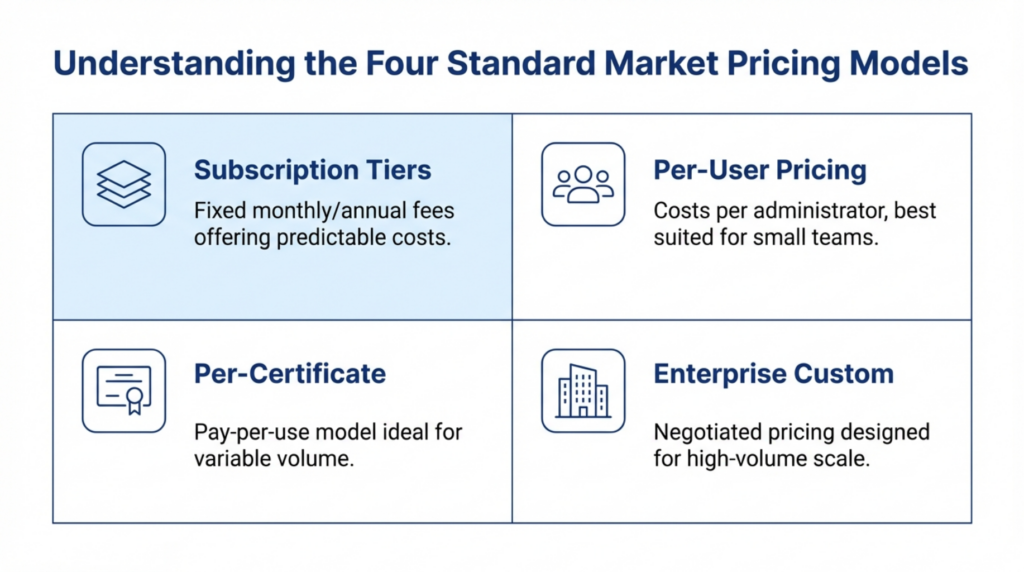
Certificate software vendors use various pricing models reflecting different business approaches and target markets. Understanding these models helps organizations predict actual costs and avoid budget surprises.
Subscription tiers represent the most common pricing structure. Vendors offer basic, professional, and enterprise tiers with increasing features and certificate volumes. MixCertificate, for example, structures pricing around certificate volume and feature access, allowing organizations to select tiers matching their specific needs.
Per-seat or per-user pricing charges based on administrator or user accounts rather than certificate volume. This model works well for organizations with small teams issuing large certificate volumes but becomes expensive when multiple departments need access.
Per-certificate pricing charges for each certificate generated. This creates predictable costs scaling directly with usage. MixCertificate offers per-certificate options within volume tiers, providing transparency about actual costs per credential issued.
Enterprise and custom pricing serves large organizations requiring dedicated support, custom integrations, or white-label solutions. Vendors typically negotiate these contracts individually based on specific requirements.
Pricing varies across vendors due to infrastructure costs, feature sophistication, target market positioning, and business models. Platforms targeting small businesses price differently from those serving enterprises. Understanding these differences helps organizations conduct meaningful certificate software pricing comparison.
Common Pricing Models and Cost Factors
Tiered Subscription Pricing
Tiered subscription pricing offers predefined packages at fixed monthly or annual costs. Each tier includes specific certificate volumes and features. Organizations pay the same amount monthly regardless of actual usage within tier limits.
This model works well for organizations with predictable certificate volumes. If you issue 500 to 1,000 certificates monthly, selecting a tier covering this range provides budget certainty. MixCertificate’s tiered structure includes free plans for smaller volumes, professional plans for growing organizations, and enterprise options for large-scale implementations.
Advantages include predictable budgeting, fixed costs facilitating financial planning, and potential volume discounts on annual commitments. Disadvantages appear when usage fluctuates significantly or organizations outgrow tiers mid-contract.
Per User / Per Admin Pricing
Per-user pricing charges based on how many people access the system rather than certificate volume. An organization with three administrators pays the same whether issuing 100 or 10,000 certificates.
Best use cases include organizations with small administrative teams but high certificate volumes. Training providers with one or two staff members issuing thousands of credentials benefit from this model. However, large organizations needing departmental access find per-user pricing expensive as costs multiply with each additional administrator.
Usage / Certificates Issued Pricing
Usage-based pricing charges per certificate generated. Organizations pay only for what they use, providing perfect cost alignment with actual needs.
Scalability impact varies by volume. Small organizations issuing 50 certificates monthly appreciate paying only for these 50. However, large-volume operations issuing 5,000 monthly certificates find per-certificate costs adding up significantly. MixCertificate balances this through volume tiers combining subscription stability with usage-based fairness.
Small versus large volume workflows require different approaches. Small workflows benefit from pay-per-use flexibility. Large workflows need volume pricing protecting against excessive costs at scale.
Enterprise Custom Pricing
Enterprise pricing addresses complex organizational needs through negotiated contracts. Typical components include base platform fees, volume commitments, integration development, dedicated support, white-label branding, and custom reporting.
Additional fees often cover API access beyond standard limits, premium support with guaranteed response times, professional services for implementation, training programs for staff, and ongoing consulting. Contract terms typically span one to three years with volume commitments and renewal clauses.
What Drives Certificate Software Costs ?
Understanding cost drivers helps organizations evaluate whether pricing aligns with value received. Different features carry different development and maintenance costs reflected in vendor pricing.
Bulk generation capability enables processing thousands of certificates simultaneously. This requires robust infrastructure handling concurrent processing, data validation at scale, and reliable delivery systems. Platforms like MixCertificate invest significantly in bulk processing infrastructure, justifying higher tiers for volume users.
Automation and integrations connect certificate systems to learning management systems, HRIS platforms, and other enterprise software. Development and maintenance of these integrations represents substantial ongoing costs. MixCertificate supports major LMS platforms through maintained integrations requiring continuous updates as partner systems evolve.
Reporting and compliance dashboards provide analytics, completion tracking, audit trails, and exportable data. Building sophisticated reporting requires database optimization, visualization tools, and flexible query capabilities. Organizations requiring detailed compliance reporting pay for this development investment.
Verification tools including QR codes, unique certificate IDs, public verification portals, and permanent record storage add security and infrastructure costs. MixCertificate maintains verification infrastructure ensuring certificates remain verifiable indefinitely, representing ongoing hosting and maintenance expenses.
Certificate Software Pricing Comparison Table
| Feature | Free/Starter | Professional | Enterprise |
|---|---|---|---|
| Annual Cost | $0 – $300 | $500 – $2,000 | $3,000 – $20,000+ |
| Certificate Volume | Up to 3,000 | 5,000 – 20,000 | Unlimited |
| Bulk Generation | Limited | Yes (1,000+) | Yes (unlimited) |
| Automation | Basic | Full automation | Advanced workflows |
| Reporting & Analytics | Basic stats | Comprehensive | Custom dashboards |
| LMS / API Integration | CSV only | API + webhooks | Full API + custom |
| Verification | QR codes | QR + portals | Advanced + branded |
| Support Level | Priority email | Dedicated account manager |
Free/Starter Tier Explanation:
Organizations issuing under 3,000 certificates annually find value in free or starter tiers. MixCertificate offers free plans covering this volume, making professional certificate generation accessible to small organizations without budget commitments. Basic automation and verification features meet fundamental needs while keeping costs at zero.
Professional Tier Explanation:
Growing organizations issuing 5,000 to 20,000 certificates annually require professional tiers. These typically cost $500 to $2,000 annually depending on volume and features. MixCertificate’s professional plans include full automation, comprehensive reporting, API integration, and priority support. This tier serves most medium-sized organizations and growing training businesses efficiently.
Enterprise Tier Explanation:
Large organizations and platforms issuing 20,000+ certificates annually need enterprise solutions. Costs range from $3,000 to $20,000+ based on volume, customization requirements, and support needs. MixCertificate enterprise offerings include unlimited certificates, dedicated account management, white-label branding, custom integrations, and guaranteed uptime service level agreements.
Hidden Costs and Additional Fees
Certificate software pricing comparison must account for costs beyond base subscription prices. Hidden fees significantly impact total cost of ownership.
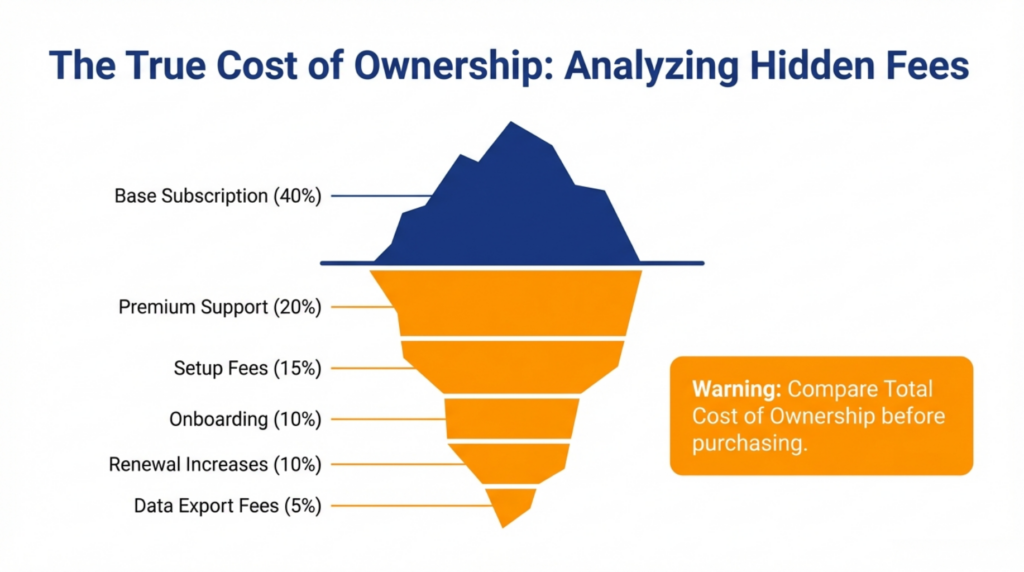
Setup fees cover initial configuration, data migration, template design, and system testing. Some vendors charge $500 to $5,000 for implementation. MixCertificate includes standard setup in subscription costs, though custom enterprise implementations may require professional services fees for complex integrations.
Onboarding fees pay for training sessions, documentation access, and initial support. These range from $200 to $2,000 depending on organization size and complexity. Organizations should clarify whether onboarding is included or additional.
Support fees separate premium support from standard tiers. While basic email support often comes included, phone support, dedicated account managers, and guaranteed response times cost extra. Enterprise contracts typically bundle premium support, but mid-tier organizations may face additional fees.
Data export fees charge for extracting historical data when switching platforms. Some vendors lock data or charge export fees ranging from $100 to $1,000. MixCertificate provides standard data export capabilities without additional charges, ensuring organizations retain data ownership.
Renewal fees sometimes differ from initial subscription costs. Introductory discounts may expire, or vendors may increase prices at renewal. Organizations should confirm multi-year pricing guarantees when budgeting long-term costs.
Transaction or certificate fees apply to per-certificate pricing models. While transparent, these accumulate significantly at volume. Organizations must calculate total annual costs based on projected certificate volumes rather than focusing only on per-certificate rates.
Cost differences for high-volume users create scale advantages or disadvantages. Some platforms offer volume discounts rewarding growth. Others maintain flat per-certificate pricing regardless of scale. MixCertificate structures volume tiers providing better per-certificate rates at higher volumes, rewarding growth with improved economics.
Value Metrics: ROI of Certificate Software
Certificate software pricing comparison requires understanding value received, not just costs paid. Return on investment calculations reveal true platform value.
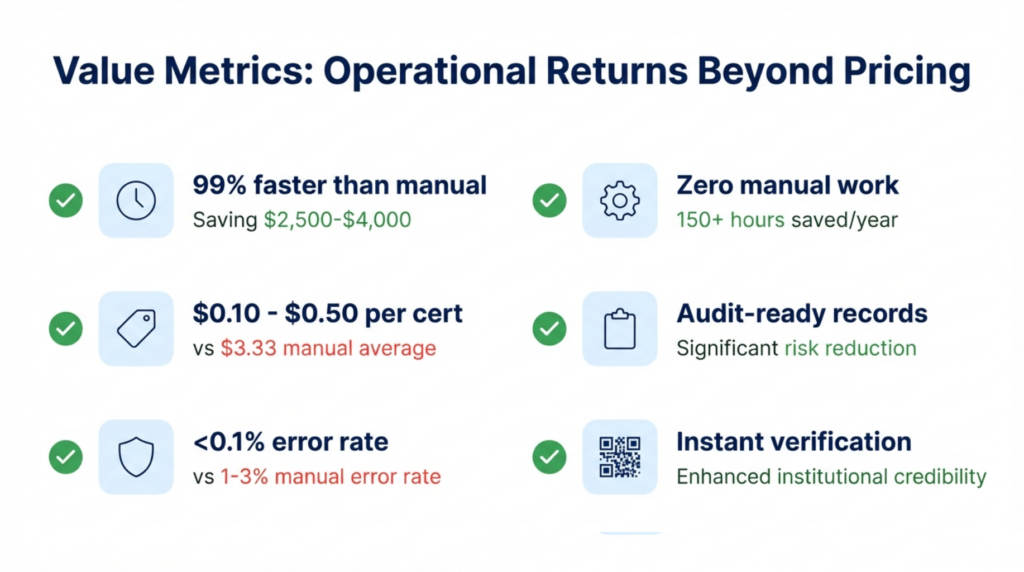
Time savings represent the most immediate value. Manual certificate creation requires 8 to 12 minutes per certificate. For 1,000 annual certificates, this equals 130 to 200 hours of staff time. At $20 per hour labor cost, manual approaches cost $2,600 to $4,000 in labor annually. MixCertificate automation reducing this to 2 hours annually saves $2,500 to $4,000, easily justifying even professional tier subscription costs.
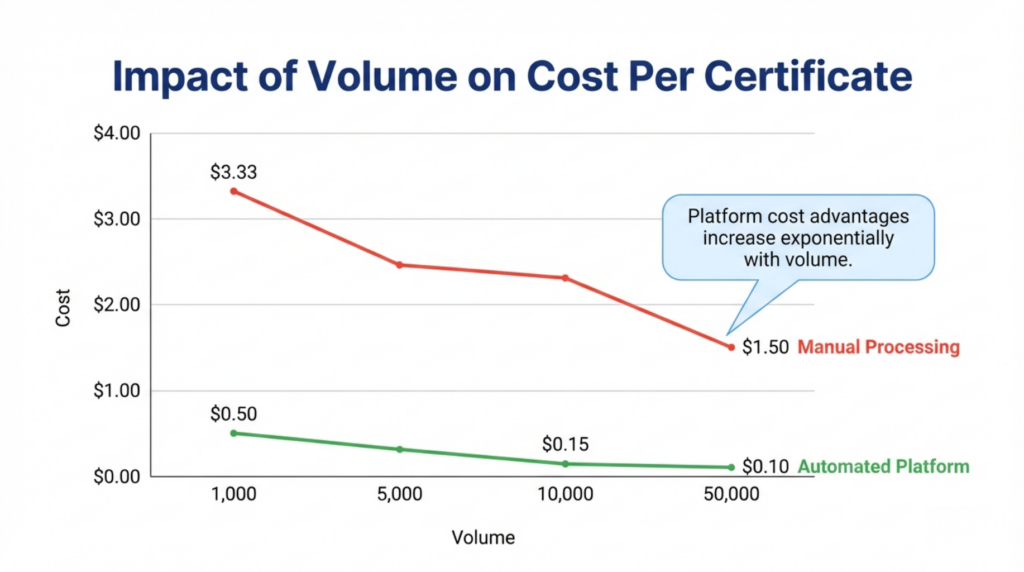
Cost per certificate provides simple comparison metrics. Calculate total annual cost (subscription plus any fees) divided by certificates issued. A $1,000 annual subscription issuing 10,000 certificates costs $0.10 per certificate. Manual creation at $20/hour labor and 10 minutes per certificate costs $3.33 per certificate. The platform delivers 97% cost reduction.
Reduced administrative labor frees staff for higher-value activities. Training coordinators spending 20 hours monthly on certificates can redirect this time to program development, student support, or business growth when automation handles certificate tasks.
Compliance risk reduction prevents audit failures, regulatory fines, and liability exposure. Organizations in regulated industries value comprehensive audit trails, expiration tracking, and verification systems. While harder to quantify, compliance value often justifies premium pricing tiers for affected organizations.
Improved learner trust through professional certificates and instant verification enhances program value perception. Students pay more for programs offering verifiable professional credentials versus basic completion certificates. This reputation value compounds over time.
Better recordkeeping prevents lost certificates, duplicate requests, and verification delays. Organizations fielding 50 “lost certificate” requests monthly at 15 minutes each spend 12.5 hours monthly on avoidable support work. MixCertificate’s permanent digital records eliminate this entirely.
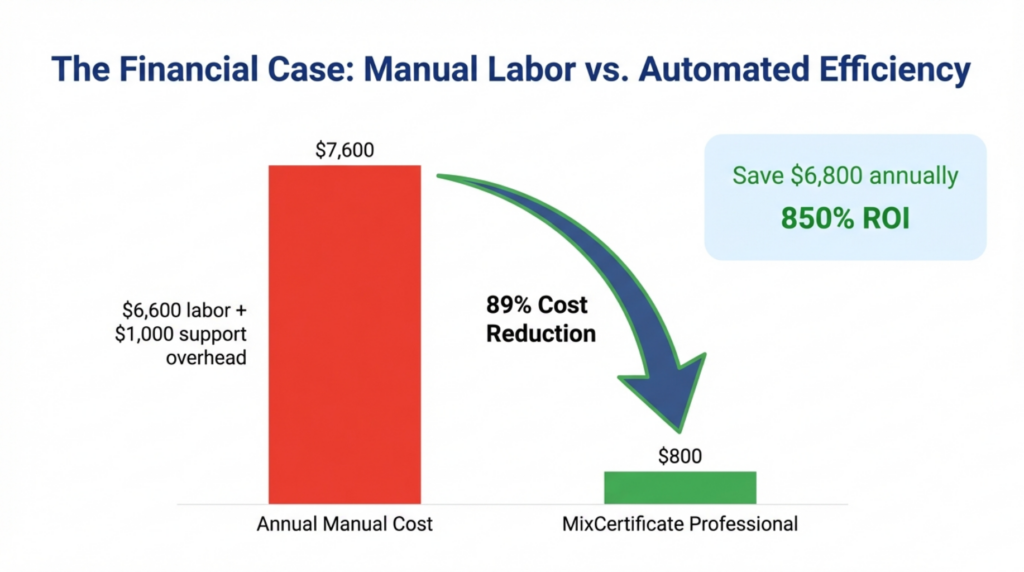
ROI Example – Small Business:
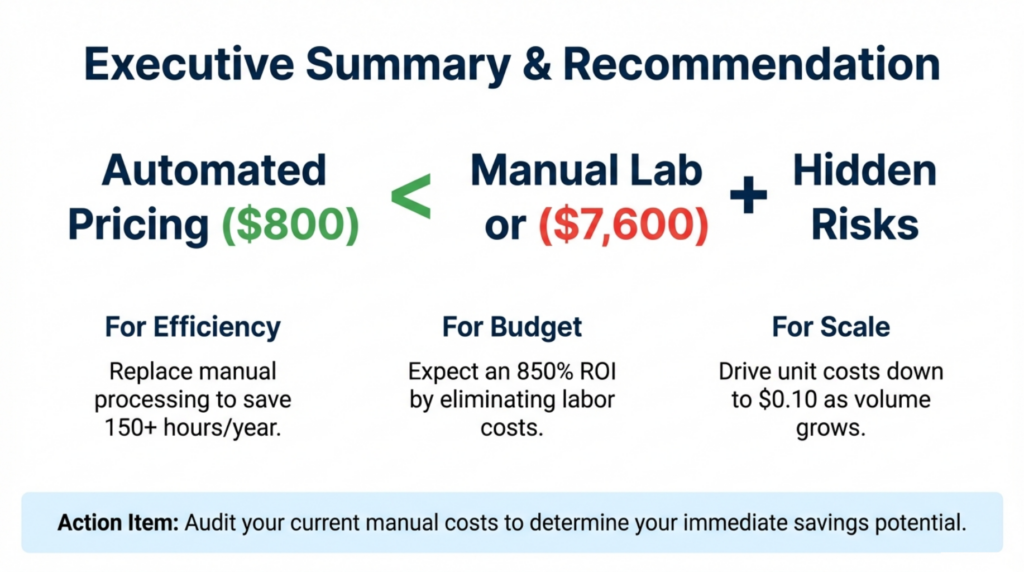
Annual certificates: 2,000 Manual cost: $6,600 labor + $1,000 support = $7,600 MixCertificate Professional: $800 annual subscription Annual savings: $6,800 ROI: 850%
ROI Example – Enterprise:
Annual certificates: 50,000 Manual cost: $165,000 labor + $25,000 support = $190,000 MixCertificate Enterprise: $8,000 annual subscription Annual savings: $182,000 ROI: 2,275%
How to Compare Certificate Software Quotes
Effective certificate software pricing comparison requires structured evaluation processes ensuring accurate total cost assessment.
CFO.com financial leadership insights emphasize the importance of calculating ROI and total cost of ownership before software purchases, particularly for recurring subscription models.
What to ask vendors:
- Total first-year cost including all fees
- Renewal pricing and any price increase caps
- What triggers tier upgrades or additional charges
- Support included versus premium support costs
- Data ownership and export policies
- Contract terms and cancellation policies
- Volume discounts or growth pricing paths
MixCertificate provides transparent pricing documentation including tier features, volume limits, and total costs, enabling straightforward comparison without hidden surprises common in opaque pricing models.
Pros and Cons of Certificate Software Pricing Models
Subscription Pricing Advantages:
- Predictable monthly or annual budgeting
- No usage surprises within tier limits
- Often includes feature updates automatically
- Suitable for stable, predictable volumes
- Easier procurement approval with fixed costs
Subscription Pricing Disadvantages:
- Paying for unused capacity in low-usage months
- Tier limits may require mid-contract upgrades
- Less flexibility for fluctuating needs
- Annual commitments reduce flexibility
Per-Certificate Pricing Advantages:
- Pay only for actual usage
- Perfect cost alignment with needs
- Great for organizations with fluctuating volumes
- Low barrier to entry for small users
- Scales naturally with growth
Per-Certificate Pricing Disadvantages:
- Unpredictable monthly costs
- Can become expensive at high volumes
- Budget forecasting requires volume estimates
- May discourage certificate issuance due to cost
Scenarios: Picking the Right Pricing Tier
Small Teams / Startups
Organizations issuing under 3,000 certificates annually should start with free or starter tiers. MixCertificate’s free plan covering 3,000 annual certificates provides professional features without budget impact, perfect for startups validating product-market fit or small training providers beginning operations.
Cost-value tradeoff: Zero financial risk, full professional features, room to grow before paid tiers become necessary. The only limitation is volume, which small teams don’t encounter initially.
Mid-Sized Organizations
Organizations issuing 5,000 to 15,000 certificates annually need professional tiers balancing features, volume, and cost. Budget range typically $800 to $2,500 annually. MixCertificate professional plans provide API integration, comprehensive reporting, and priority support at this price point.
Cost-value tradeoff: Justify subscription through labor savings. At $1,500 annual cost and 10,000 certificates, you pay $0.15 per certificate while saving 150+ hours of manual work worth $3,000+ in labor costs. Net benefit: $1,500+ annually.
Large Enterprises
Organizations issuing 20,000 to 100,000+ certificates annually require enterprise solutions with dedicated support, white-label branding, and unlimited volume. Budget range $5,000 to $20,000 annually depending on specific requirements.
Cost-value tradeoff: At 50,000 annual certificates, enterprise subscription at $8,000 costs $0.16 per certificate. Manual approach would cost $165,000 in labor. Savings of $157,000 annually justify premium pricing while gaining compliance, automation, and brand control benefits.
Frequently Asked Questions
What is typical certificate software pricing?
Typical certificate software pricing ranges from free plans covering 1,000-3,000 certificates annually to professional tiers at $500-$2,000 annually for 5,000-20,000 certificates, and enterprise solutions from $3,000-$20,000+ for unlimited volumes. MixCertificate offers transparent tiered pricing across this spectrum. Actual costs depend on certificate volume, features needed, and integration requirements.
How much does certificate software cost?
Certificate software costs vary significantly based on volume and features. Small organizations pay $0-$500 annually using free or starter plans. Medium organizations pay $500-$3,000 annually for professional features. Large enterprises pay $3,000-$20,000+ annually for unlimited volume and dedicated support. Certificate software pricing comparison reveals MixCertificate typically costs 50-70% less than comparable enterprise platforms while providing equivalent features.
Is per-certificate pricing better than subscription?
Per-certificate pricing works better for organizations with unpredictable or highly variable certificate volumes, offering perfect usage alignment without paying for unused capacity. Subscription pricing suits organizations with stable, predictable volumes, providing budget certainty and often better per-certificate economics at scale. MixCertificate offers both models through volume tiers, allowing organizations to choose the approach matching their usage patterns.
Are there hidden costs in certificate software?
Hidden costs in certificate software pricing comparison include setup fees ($500-$5,000), onboarding fees ($200-$2,000), premium support charges ($500-$3,000 annually), data export fees ($100-$1,000), and renewal price increases (10-30% common). Organizations should request total first-year cost documentation including all potential fees. MixCertificate includes setup and standard support in subscription costs, avoiding common hidden fees.
How do I compare certificate pricing effectively?
Compare certificate pricing by calculating total cost of ownership including subscription, setup, support, and any transaction fees, then dividing by annual certificate volume for per-certificate cost. Request complete pricing documentation from vendors, including renewal terms and upgrade triggers. Compare feature parity across similar price points. MixCertificate simplifies comparison through transparent, all-inclusive tier pricing without surprise fees.
Does certificate software pricing include support?
Certificate software pricing typically includes basic email support in all tiers, with premium support (phone, dedicated account management, guaranteed response times) reserved for higher tiers or additional fees. Enterprise contracts usually include comprehensive support. Free and starter tiers often provide community or documentation-only support. MixCertificate includes email support across all paid tiers and dedicated account management for enterprise customers.
When should I upgrade certificate pricing tiers?
Upgrade certificate pricing tiers when approaching volume limits of current tier (typically at 80-90% capacity), when needing features exclusive to higher tiers (API access, white-labeling, advanced reporting), when requiring faster support response times, or when per-certificate costs of current tier exceed higher tier amortized costs. MixCertificate provides usage dashboards showing tier utilization, making upgrade decisions data-driven rather than reactive.
Conclusion
Certificate software pricing comparison reveals significant cost and value variations across platforms and pricing models. Organizations must evaluate total cost of ownership including hidden fees, calculate ROI through labor savings and efficiency gains, and match pricing models to their specific usage patterns.
MixCertificate offers transparent, predictable pricing from free plans for small organizations through enterprise solutions for high-volume users. By understanding pricing drivers, hidden costs, and value metrics, organizations can make informed decisions balancing budget constraints with feature requirements. The best certificate software pricing comparison considers both immediate costs and long-term value, ensuring solutions deliver positive ROI while meeting organizational needs for automation, compliance, and scalability.
