
Online course creators issue certificates to prove course completion, motivate learners, and build brand credibility. The best certificate software for online courses automates this process, replacing manual PDF creation with systems that generate, verify, and deliver certificates at scale while integrating seamlessly with learning management systems.
Course creators face unique certificate challenges. Manual creation delays certificate delivery by days after course completion. Design tools like Canva lack automation capabilities for cohort-based programs. LMS-generated certificates often fail branding requirements and verification standards. This guide compares the best certificate software for online courses designed specifically for education creators and training businesses.
What Is Certificate Software for Online Courses?
Certificate software for online courses is a digital platform that automates certificate creation, delivery, and verification for online learning programs. Instead of manually designing individual certificates, course creators connect their LMS systems and generate personalized certificates automatically when students complete courses.
Course creators use the best certificate software for online courses to document various learning achievements. Course completion certificates prove students finished program requirements. Skill certification credentials validate competency in specific topics. Professional development certificates document continuing education for career advancement.
The fundamental difference between manual certificates, LMS-generated certificates, and dedicated platforms lies in automation depth and verification capability. Manual methods require designing each certificate individually. LMS-generated certificates automate delivery but lack advanced branding and verification features. The best certificate software for online courses provides complete automation, custom branding, and built-in verification systems that manual and basic LMS approaches cannot match.
Why Online Course Creators Need Dedicated Certificate Software ?
Online course businesses operate at varying scales requiring different automation levels. Solo creators launching courses need efficient certificate delivery without manual work. Growing course businesses serving hundreds of students monthly require systematic automation. Large EdTech platforms teaching thousands simultaneously demand enterprise-grade reliability.
Automation at scale determines whether creators can manage certificate delivery as student numbers grow. Issuing 500 certificates manually requires 65 to 100 hours of work. The best certificate software for online courses reduces this to 30 minutes, enabling creators to focus on content development rather than administrative tasks.
Branding consistency matters for course credibility. Each certificate represents the creator’s brand and course quality. Manual creation produces variations in logo placement, colors, and formatting. Certificate software like MixCertificate ensures every certificate maintains identical professional branding regardless of volume or delivery timing.
Student experience improves with instant certificate delivery. Students completing courses expect immediate certificate access for portfolio building, LinkedIn sharing, or employer verification. Delayed delivery reduces satisfaction and perceived course value. Automation delivers certificates within minutes of course completion, maintaining engagement while learning content remains fresh.
Reduced administrative work frees creators for business growth activities. Certificate management often consumes 15 to 25 percent of small course business administrative time. The best certificate software for online courses eliminates this workload through complete automation, allowing creators to develop new courses, engage students, and scale operations. As online education continues to expand globally, recognized digital learning credentials play a growing role in career development and professional mobility.
Post-course verification protects course credibility. Students share certificates with employers, clients, and professional networks. Without verification capability, certificates become vulnerable to forgery. Platforms like MixCertificate provide built-in verification through QR codes, offering instant authentication that protects creator reputation and certificate value.
LMS Integration & Automation for Course Certificates
Learning management system integration determines automation quality. When students complete courses, integrated certificate software automatically generates credentials without creator intervention. This seamless workflow eliminates manual checking, data entry, and certificate distribution work. Industry standards for verifiable digital credentials are being developed to ensure online certificates can be authenticated across platforms and organizations.
LMS workflows connect course completion to certificate delivery automatically. Student finishes final lesson, passes final assessment, or meets completion requirements. LMS triggers certificate generation. Software creates personalized certificate with student details. System delivers certificate via email with verification link. This entire process completes in minutes without human involvement.
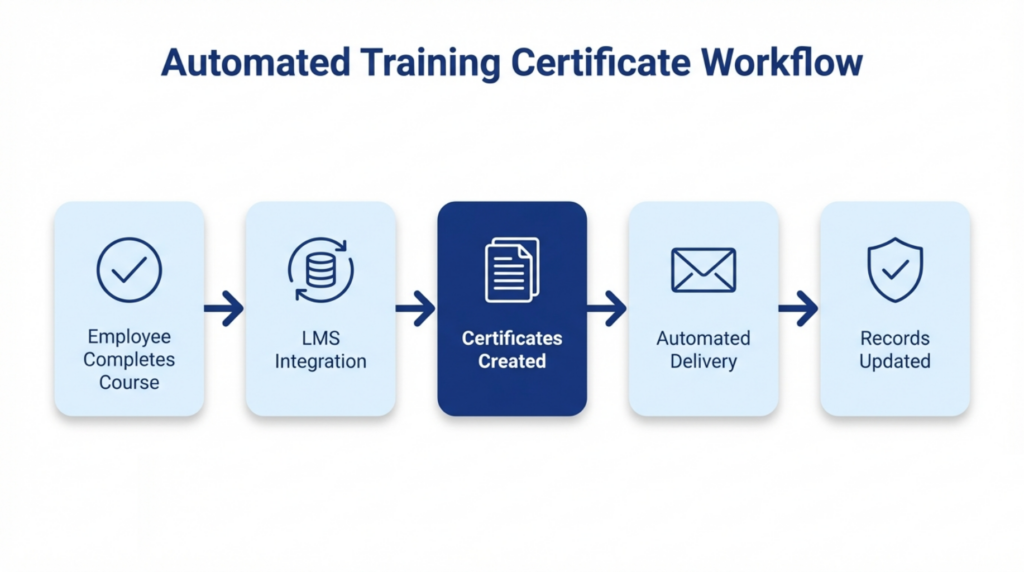
Auto-issuance on course completion maintains momentum and satisfaction. Students experience immediate reward for course completion. No waiting days or weeks for manual certificate processing. Instant delivery enhances course value perception and encourages social sharing while enthusiasm remains high.
Common LMS platforms supporting integration include Teachable, Thinkific, Kajabi, Moodle, and Canvas. The best certificate software for online courses provides flexible integration options accommodating various platforms through APIs, webhooks, or CSV exports. MixCertificate supports integration with major LMS platforms through multiple connection methods, ensuring creators can automate certificates regardless of their chosen learning system.
Automation matters particularly for large cohorts and evergreen courses. Live cohort launches generate hundreds of simultaneous completions. Evergreen courses produce steady daily completions. Manual certificate creation cannot handle either scenario efficiently. Platforms like MixCertificate process any volume instantly, whether ten completions or ten thousand.
Certificate Reporting & Learner Records
Course businesses need visibility into completion metrics and certificate issuance. Reporting features provide insights supporting business decisions, partnership requirements, and learner support.
Completion tracking answers essential questions. How many students completed courses this month? Which courses show highest completion rates? What percentage of enrolled students complete programs? The best certificate software for online courses provides dashboards showing these metrics without manual spreadsheet compilation.
Exportable reports support various business needs. Partnership agreements may require completion statistics. Accreditation bodies demand documented completion records. Marketing teams need completion data for testimonial outreach. MixCertificate exports data in standard formats matching organizational requirements, including CSV and PDF reports for business analytics.
Learner certificate history enables student support and credential verification. Students contacting support about lost certificates need quick reissuance. Employers verifying student credentials need instant confirmation. Centralized records make both scenarios simple, reducing support workload while enhancing learner experience.
Certificate data proves valuable for audits, partnerships, and proof of learning. Corporate training partnerships require documented completion for client billing. Educational accreditation reviews demand comprehensive student achievement records. Professional licensing boards verify continuing education credits. Systematic certificate records satisfy all these requirements efficiently.
Common Certificate Methods Used in Online Courses
Design Tools (Canva, PowerPoint)
Many course creators begin with Canva or PowerPoint for certificate design. These tools offer unlimited customization and familiar interfaces. Creators can design certificates matching exact brand specifications without technical constraints.
However, manual processes create bottlenecks as student numbers grow. Each certificate requires individual editing, taking 8 to 12 minutes per student. For a 100-student course launch, this translates to 13 to 20 hours of manual work. Design tools provide no automation, no bulk generation, and no integrated delivery.
Additionally, they fail at scale entirely. Course creators successfully serving 50 students monthly cannot sustain manual certificate creation as growth reaches 200 or 500 monthly completions. Manual methods become the limiting factor preventing business scaling.
LMS-Generated Certificates
Learning management systems include built-in certificate features. Upon course completion, the LMS automatically creates certificates for learners. This automation eliminates manual work for basic certificate delivery.
However, limited branding and control restrict professional presentation. LMS certificates typically use generic templates with minimal customization options. Corporate branding, unique design elements, or specialized formatting often exceed built-in capabilities. Creators wanting certificates reflecting their brand identity find LMS options insufficient.
Furthermore, portability issues arise with LMS-dependent certificates. When creators migrate to different platforms or students need certificates after LMS access expires, LMS-hosted certificates become problematic. Students cannot retain independent copies for permanent professional portfolios.
Dedicated Certificate Software
Dedicated platforms providing the best certificate software for online courses solve limitations of both manual methods and basic LMS certificates. Bulk generation processes entire course cohorts simultaneously. Upload student completion data, select certificate templates, and generate hundreds of certificates in minutes.
MixCertificate connects to LMS systems through integrations, automatically generating certificates when students complete requirements. This eliminates manual triggering while maintaining independence from any single LMS platform. Course creators maintain full control over certificate branding and delivery regardless of which learning platform they use.
Verification through QR codes and unique certificate URLs enables instant authentication. Students share verifiable credentials with employers and professional networks. Anyone can confirm certificate authenticity in 30 seconds without contacting the course creator. MixCertificate’s verification portals provide public access to certificate validation without login requirements.
Centralized certificate records maintain comprehensive issuance history. Creators can search any certificate by student name, course, or date. Students access certificates permanently through unique links, eliminating lost certificate problems requiring creator support time.
Feature-by-Feature Comparison for Online Courses
| Feature | Design Tools | LMS Certificates | Dedicated Certificate Software |
|---|---|---|---|
| Bulk generation | No (one at a time) | Course-by-course | Yes (1,000+ simultaneously) |
| LMS integration | None | Built-in | API/webhook integration |
| Automation triggers | Manual only | Basic completion | Advanced completion rules |
| Verification | None | Login required | QR codes, public portals |
| Reporting & exports | None | Limited | Comprehensive analytics |
| Branding control | Unlimited | Limited templates | Custom templates + branding |
| Scalability | Poor (linear time) | Platform-dependent | Excellent (any volume) |
Bulk generation capability determines whether creators can efficiently process course launches and cohort completions. The best certificate software for online courses handles 5,000 students as efficiently as 50, while manual methods scale linearly with student count.
LMS integration quality affects automation depth and maintenance burden. Direct integration through APIs provides seamless automation. CSV export workflows require manual steps but support any LMS. Webhook triggers enable real-time certificate generation immediately following course completion. MixCertificate offers all three integration methods, providing flexibility for different course platform configurations.
Automation triggers control when certificates generate. Basic triggers respond to simple course completion. Advanced rules accommodate complex requirements: minimum quiz scores, specific lesson completions, or multi-course program requirements. Flexibility matters for sophisticated course structures.
Verification features protect creator reputation and certificate value. QR codes enable instant smartphone-based verification. Unique certificate URLs provide web-based confirmation. MixCertificate includes public verification portals where anyone can confirm certificate authenticity using certificate IDs without login requirements.
Reporting and export capabilities support business operations. Dashboard analytics show completion trends, popular courses, and issuance volumes. CSV exports integrate certificate data with email marketing platforms, CRM systems, or accounting software. Data visibility enables informed business decisions.
Automation, Accuracy & Scale for Course Certificates
Manual certificate workflows create unsustainable workloads as course businesses grow. Course completes, creator exports student list, designer creates certificates individually, manager reviews for accuracy, and administrator sends certificates via email. This process takes days or weeks for large cohorts.
Automated workflows eliminate delays and scale effortlessly. Student completes course, LMS triggers certificate generation, software creates personalized certificate, system delivers certificate via email instantly. The entire process completes in minutes without human intervention. MixCertificate processes this workflow automatically, handling everything from generation to delivery without requiring creator attention.
Error reduction becomes critical for professional credibility. Manual creation produces errors in 1 to 3 percent of certificates through typing mistakes or incorrect data entry. The best certificate software for online courses validates data before generation, flagging incomplete information or formatting issues. Error rates drop below 0.1 percent with automated validation.
Time comparison examples demonstrate efficiency differences. For 50 students, manual creation requires 6 to 10 hours versus 15 minutes with automation. For 5,000 students in large course launches, manual approaches need 650 to 1,000 hours versus 40 minutes with certificate software like MixCertificate.
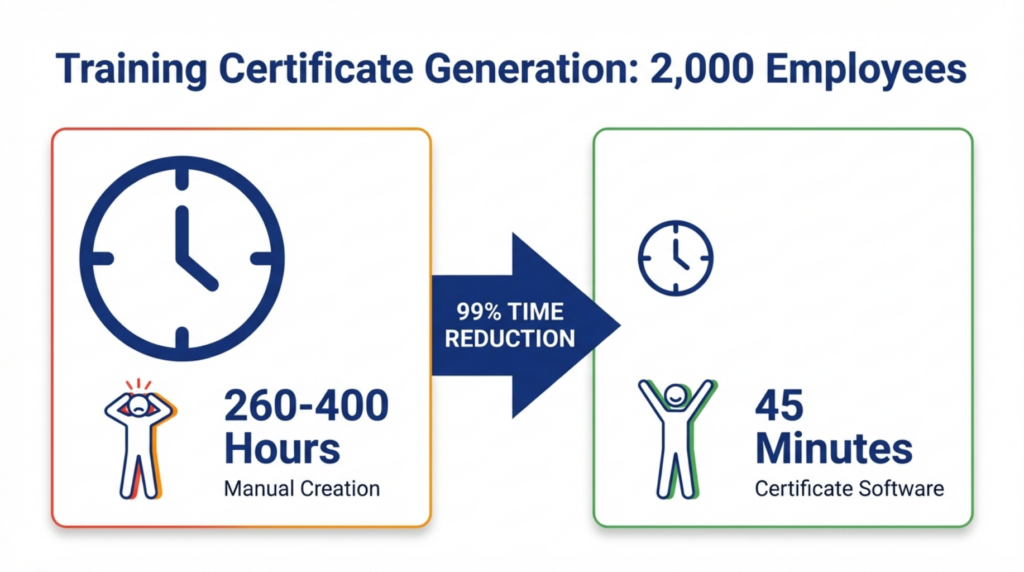
Evergreen courses and cohort-based programs both benefit from automation. Evergreen courses generate steady daily completions requiring consistent certificate delivery. Cohort-based launches create concentrated completion spikes demanding bulk processing. The best certificate software for online courses handles both scenarios efficiently without creator involvement.
Verification & Trust for Online Course Certificates
Online course certificates require verification to maintain professional value. Employers verify learning claims before hiring or promotion decisions. Clients confirm consultant credentials before engagement. Professional licensing boards validate continuing education credits.
Preventing fake certificates protects course creator reputation and student credential value. Individuals claiming course completion without actual participation undermine creator credibility. Forged certificates damage trust when discovered, making employers skeptical of all credentials from that creator.
Employer and partner trust depends on verification capability. Corporate training partnerships require verifiable completion for client billing and ROI documentation. Educational accreditation reviews demand authenticated student achievement records. Professional association partnerships need confirmable continuing education completion.
QR codes and verification links enable instant authentication. Each certificate includes a unique QR code linking to verification details. Employers scan codes with smartphones to see verified completion information. Certificate URLs provide web-based verification for environments without QR scanning capability. MixCertificate generates unique QR codes and verification URLs for every certificate issued, providing instant validation accessible to anyone.
Long-term credential value requires permanent verification records. Students may need course certificates years after completion for job applications, promotions, or license renewals. The best certificate software for online courses maintains perpetual verification records supporting these long-term needs without ongoing creator maintenance. MixCertificate stores verification data permanently, ensuring certificates remain verifiable five or ten years after issuance.
Online Course Use Cases
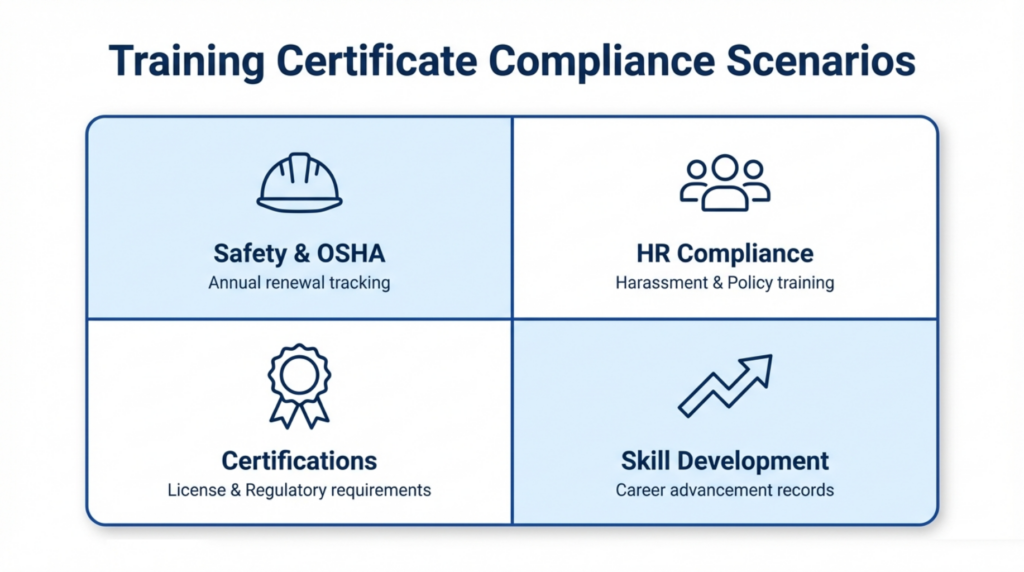
Cohort-Based Courses
Cohort-based programs run on fixed schedules with defined start and end dates. All students progress through content together, completing courses simultaneously. This creates concentrated certificate demand when cohorts finish.
The best certificate software for online courses enables cohort creators to process entire groups in single batches. When 200 students complete a six-week cohort, generate all certificates simultaneously rather than individually over days. MixCertificate’s bulk generation handles entire cohort completions in minutes, maintaining launch momentum and maximizing social proof from simultaneous certificate sharing.
Self-Paced Online Programs
Self-paced courses allow students to progress on individual schedules. Completions happen continuously throughout weeks and months rather than concentrated periods. This requires consistent automated certificate delivery without creator involvement.
Automation becomes essential for self-paced programs. Daily completions demand daily certificate issuance. Manual processing creates unsustainable workload or unacceptable delivery delays. The best certificate software for online courses delivers certificates instantly regardless of completion timing. MixCertificate monitors LMS completions continuously, issuing certificates automatically as students finish courses without any manual triggering required.
Certification-Focused Courses
Professional certification programs emphasize credential value for career advancement. Students enroll specifically for certificates proving competency to employers and clients. Certificate quality, verification, and professional presentation directly impact course value perception.
Verification features become mandatory for certification-focused courses. Employers need to confirm credential authenticity. Professional associations require verifiable continuing education. MixCertificate provides robust verification systems supporting certificate credibility and professional recognition through tamper-proof QR codes and permanent verification portals.
External Training & Partnerships
Course creators often partner with corporations, associations, or educational institutions for training delivery. Partner agreements typically require specific certificate formatting, completion reporting, and verification capabilities.
Branding flexibility matters for partnership training. Partner organizations may require their branding on certificates alongside creator branding. The best certificate software for online courses supports customizable templates accommodating various partnership branding requirements without separate manual certificate creation. MixCertificate allows multiple certificate templates with different branding configurations, enabling creators to serve various partnership requirements efficiently.
Pros and Cons of Certificate Software for Online Courses
Advantages:
- Complete automation eliminating manual certificate work
- LMS integration enabling seamless course completion workflows
- Instant certificate delivery enhancing student satisfaction
- Built-in verification protecting credential value
- Comprehensive reporting supporting business decisions
- Bulk generation processing any student volume
- Professional branding maintaining course credibility
- Time savings of 95+ percent versus manual creation
- Error rates below 0.1 percent with data validation
- Scalability supporting business growth without workload increases
Disadvantages:
- Platform subscription costs (typically $200-$1,000 annually)
- Initial setup time for template creation and integration
- Learning curve for new systems and workflows
- Integration limitations with uncommon LMS platforms
- Less design flexibility than unlimited custom design tools
Best Certificate Software for Online Courses (Comparison Overview)
Course creators should evaluate certificate platforms based on LMS compatibility first. Verify the software integrates with your specific learning platform through direct API, webhooks, or reliable CSV workflows. Integration quality determines automation success and maintenance burden.
Automation depth affects ongoing workload reduction. Basic automation triggers simple course completion. Advanced automation handles complex multi-course programs, prerequisite requirements, or assessment score thresholds. Match automation capabilities to your course structure complexity.
Reporting quality determines business insight value. Look for platforms providing completion analytics, course performance metrics, and exportable data. Reports should answer questions about student progress, popular courses, and completion trends without manual spreadsheet compilation.
Pricing transparency matters for accurate budgeting. Evaluate per-certificate pricing, monthly subscriptions, or annual plans based on your expected volume. MixCertificate offers transparent pricing with a free tier covering 3,000 certificates annually, making it accessible for growing course creators. Professional plans start at affordable rates suitable for established course businesses, while enterprise options serve large EdTech platforms requiring high-volume certificate generation.
Branding control ensures certificates reflect course quality and creator identity. Custom templates should support logo uploads, color customization, multiple signature fields, and flexible layouts. MixCertificate provides complete template customization, allowing course creators to design certificates matching their exact brand specifications while maintaining professional quality standards.
Verification capability protects long-term credential value. Look for platforms offering QR code verification, unique certificate URLs, and public verification portals accessible without login requirements. MixCertificate includes all these verification features as standard, ensuring every certificate remains verifiable throughout its lifetime without additional configuration.
Which Certificate Software Is Best for Your Online Course?
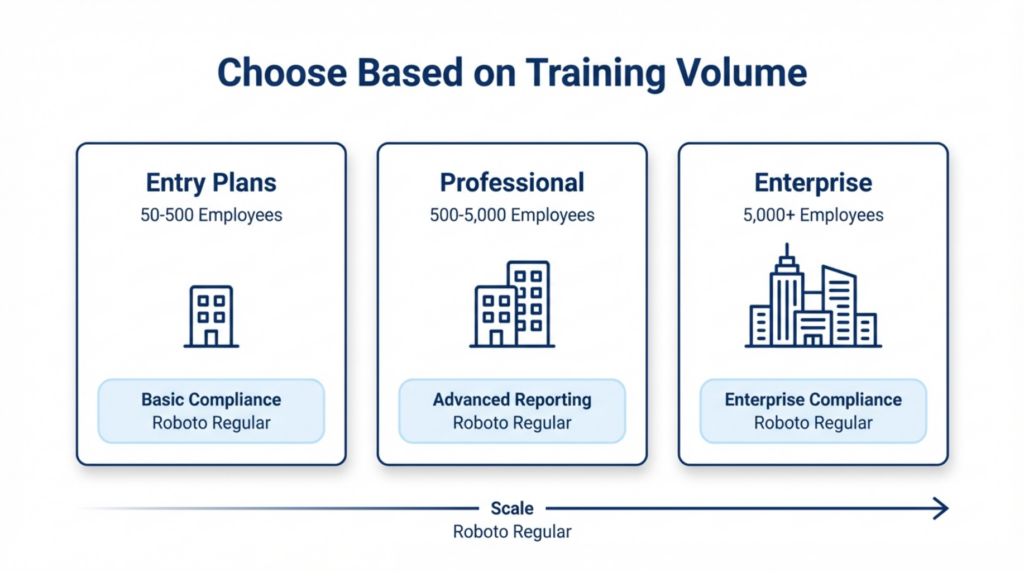
Solo creators teaching one or two courses with under 100 monthly completions benefit from platforms with simple setup and affordable entry pricing. Automation value appears immediately even at small volumes, saving 6 to 10 hours monthly versus manual certificate creation. MixCertificate’s free tier supports up to 3,000 certificates annually, covering most solo creator needs without subscription costs.
Growing course businesses serving 100 to 1,000 monthly students require reliable automation and LMS integration. Time savings become substantial at this volume, easily justifying platform investment. The best certificate software for online courses at this scale provides comprehensive features without enterprise complexity. MixCertificate’s professional plans offer advanced automation, comprehensive reporting, and priority support suitable for growing course businesses.
Large EdTech platforms teaching 1,000 to 10,000 students monthly need enterprise-grade reliability and advanced features. Multi-course program support, sophisticated completion rules, and white-label branding justify premium platform investment. Verification becomes critical given the volume of employer and partner verification requests. MixCertificate’s enterprise solutions provide dedicated account management, custom integration development, and unlimited certificate generation supporting large-scale education platforms.
Certification providers emphasizing credential value require robust verification and professional presentation. Certificate quality, verification capability, and long-term record storage directly impact student enrollment decisions. The best certificate software for online courses for certification programs prioritizes these features over simple automation alone. MixCertificate specializes in verification-focused certificates ideal for professional certification courses.
Frequently Asked Questions
What is the best certificate software for online courses?
The best certificate software for online courses depends on your LMS platform, student volume, and branding requirements. Platforms offering LMS integration, automation, and verification work well for most course creators. MixCertificate provides comprehensive features including automation, verification, and reporting suitable for courses of all sizes. Evaluate software based on your specific learning platform compatibility, expected student volume, and certificate customization needs.
Can online course certificates be automated?
Yes, online course certificates can be fully automated using dedicated certificate software. Integration with learning management systems triggers automatic certificate generation when students complete courses. Student data populates automatically, eliminating manual entry. MixCertificate connects to popular LMS platforms through APIs and webhooks, automating the entire certificate generation and delivery process. Automation reduces certificate issuance from hours to minutes while maintaining professional quality and delivery reliability.
Is certificate software better than LMS certificates?
The best certificate software for online courses offers significant advantages over basic LMS certificates for creators requiring custom branding and verification. Dedicated platforms like MixCertificate provide superior design control, robust verification systems, comprehensive reporting, and platform-independent storage. LMS certificates work for basic needs but lack advanced customization and verification capabilities course businesses often require for professional credentialing.
How does certificate verification work for online courses?
Certificate verification uses QR codes or unique certificate IDs embedded in each credential. Students share certificates with employers or professional networks. Verifiers scan QR codes with smartphones or enter certificate IDs on verification portals. MixCertificate displays authentic completion details confirming credential validity in 30 seconds without contacting course creators. Systems like MixCertificate maintain permanent verification records accessible years after certificate issuance.
How many students justify using certificate software?
Course creators serving 50 or more students monthly benefit from certificate software. Time savings begin immediately, with labor reductions of 6 to 10 hours even at small volumes. At 200 monthly students, time savings reach 25 to 40 hours monthly. The best certificate software for online courses becomes essential as student volume approaches 500 monthly completions. MixCertificate’s free tier covers up to 3,000 annual certificates, making automation accessible even for smaller course creators.
Can certificates be customized for course branding?
Yes, the best certificate software for online courses supports extensive branding customization. Upload logos, customize colors matching brand guidelines, add instructor signatures, and design layouts reflecting course identity. MixCertificate provides complete template customization tools allowing course creators to design certificates matching their exact brand specifications. Templates accommodate various branding requirements while maintaining consistent professional quality across all certificate issuances regardless of student volume.
Does certificate software work with all LMS platforms?
Most certificate software platforms support major LMS systems through API integrations, webhooks, or CSV exports. MixCertificate offers direct integration with popular platforms like Teachable, Thinkific, Kajabi, Moodle, and Canvas through multiple connection methods. CSV export workflows support any LMS capable of exporting student completion data. Verify specific LMS compatibility before selecting certificate software to ensure seamless automation with your chosen learning platform.
Conclusion
The best certificate software for online courses transforms certificate management from time-consuming manual work into automated systems completing in minutes. Course creators serving 50 or more students monthly benefit from automation, verification, and professional branding that manual and basic LMS approaches cannot provide efficiently.
Evaluation should prioritize LMS integration quality, automation depth, and verification features. Compare platforms based on your specific learning management system, expected student volume, and branding requirements. MixCertificate provides comprehensive certificate automation designed specifically for online course creators, offering features from basic automation for solo creators to enterprise solutions for large EdTech platforms. The best certificate software for online courses enables professional certificate delivery while course businesses scale, eliminating administrative bottlenecks that limit growth.
