
Digital Certificates vs PDF Certificates: Complete Comparison
Digital certificates vs PDF certificates is a comparison many institutions now face as credentialing moves online. Schools, training providers, and HR teams increasingly rely on certificates to validate skills and achievements, but the format used can directly impact trust, verification speed, and long-term usability.
While PDF certificates have been the standard for years, digital certificates introduce verification, automation, and security features that PDFs simply cannot provide. Understanding the difference is essential before choosing a credentialing approach that supports growth and credibility.
What Are Digital Certificates?
Digital certificates are online credentials hosted on a secure platform. Each certificate typically has a unique URL, verification ID, and QR code that allows anyone to instantly verify its authenticity.
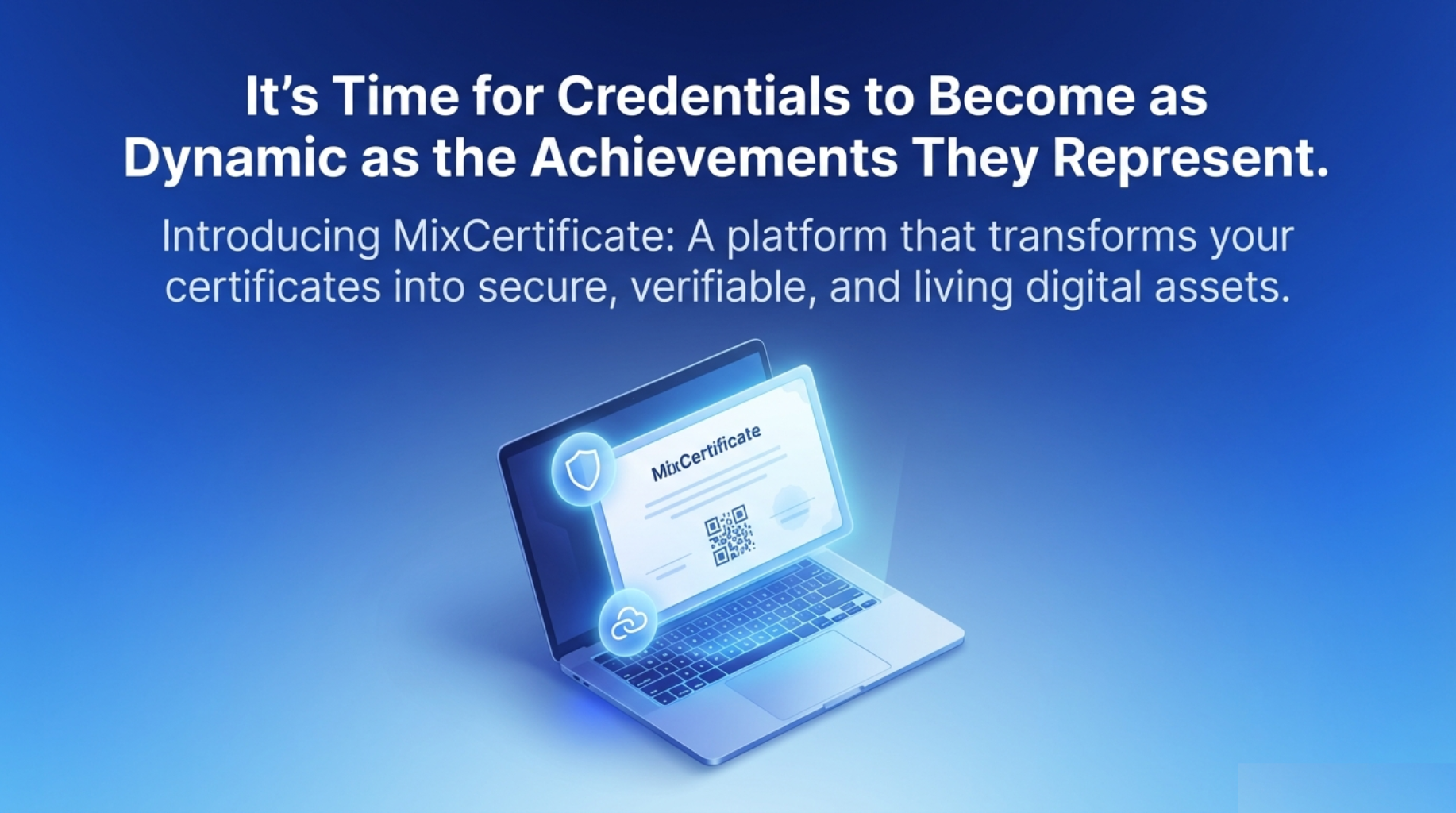
Unlike static files, digital certificates are dynamic. They can be accessed anytime, shared easily, and validated without contacting the issuing organization. Platforms like MixCertificate provide hosting, verification, and lifecycle management for these digital credentials.
What Are PDF Certificates?
PDF certificates are downloadable document files shared via email or messaging platforms. Once issued, they exist as static files stored on devices, inboxes, or cloud folders.
PDF certificates look professional but rely entirely on manual verification. If someone needs to confirm authenticity, they must contact the issuing institution directly, which can be slow and inconsistent.
Feature-by-Feature Comparison
| Feature | Digital Certificates | PDF Certificates |
|---|---|---|
| Verification | Instant online verification | Manual email or phone verification |
| Security | Tamper-resistant with unique IDs | Easy to edit or duplicate |
| Accessibility | Always available via link | Can be lost or deleted |
| Automation | Fully automated issuance & tracking | Manual sending and record keeping |
| Scalability | Handles thousands easily | Becomes unmanageable at scale |
| Trust | High credibility | Depends on issuer response |
Digital certificates vs PDF certificates differ most in verification and reliability. PDFs depend on human confirmation, while digital credentials are self-verifying.
Automation, Speed & Scalability
Digital certificates eliminate repetitive administrative work. Issuance, hosting, and verification are automated, saving hours every week. Institutions issuing certificates at scale benefit the most from this automation.
PDF certificates require manual generation, emailing, record storage, and verification responses. As volume increases, delays and errors become more common, making PDFs unsuitable for large or growing organizations.
Security, Verification & Trust
Security is a major concern in credentialing. Digital certificates include verification layers such as QR codes, certificate IDs, and online validation pages. This significantly reduces fraud and impersonation.
PDF certificates lack built-in verification. Edited files, fake certificates, and unverified claims are difficult to detect. Employers and institutions must rely on trust or slow manual checks.
Understanding Digital Certificate Verification
Unlike static PDF certificates, digital certificates are designed to be verifiable, tamper-resistant, and traceable. Verification ensures that a credential is authentic, has not been altered, and can be trusted by employers, institutions, or third parties.
According to global credentialing standards, verifiable digital credentials improve trust and reduce certificate fraud.
Use Cases
Education
Universities and training institutes use digital certificates for degrees, diplomas, and course completions, ensuring lifelong access and easy verification for employers.
Corporate Training
HR teams issue digital credentials for internal training, compliance, and skill development, allowing instant validation during audits or hiring.
Events & Certifications
Event organizers and certification bodies benefit from automated issuance and public verification, improving credibility and reducing support queries.
Pros and Cons
Digital Certificates
Pros
-
Instant verification
-
Secure and tamper-resistant
-
Scalable and automated
-
Easy sharing and accessibility
Cons
-
Requires a hosting platform
-
Internet access needed for verification
PDF Certificates
Pros
-
Simple to create
-
Offline access possible
Cons
-
No built-in verification
-
High fraud risk
-
Manual workload increases over time
-
Poor scalability
Which Option Is Better for You?
If you issue certificates occasionally and do not require verification, PDF certificates may suffice. However, if you value trust, automation, and long-term credibility, digital certificates are the better choice.
For institutions issuing credentials regularly or at scale, digital certificates vs PDF certificates is no longer an equal comparison. Digital credentials provide reliability, security, and efficiency that PDFs cannot match.
Frequently Asked Questions (FAQs)
What is the main difference between digital certificates vs PDF certificates?
The main difference lies in verification. Digital certificates can be verified instantly online, while PDF certificates require manual confirmation from the issuing organization, which is slower and less secure.
Are digital certificates more secure than PDF certificates?
Yes. Digital certificates include unique IDs, verification pages, and QR codes that prevent tampering. PDF certificates can be edited or duplicated without detection.
Can employers verify digital certificates easily?
Employers can verify digital certificates instantly by visiting the verification link or scanning the QR code, without contacting the issuing institution.
Do PDF certificates expire or become invalid?
PDF certificates do not technically expire, but they can be lost, altered, or become difficult to verify over time, reducing their long-term reliability.
Is switching from PDF to digital certificates difficult?
No. Platforms like MixCertificate allow institutions to automate issuance and verification without complex technical setup.
Which format is better for large institutions?
Digital certificates are better for large institutions due to automation, scalability, and reduced administrative workload.
