Introduction
Many small businesses and training organizations start their certificate automation journey with SimpleCert because it offers a straightforward approach to digital credential issuance. SimpleCert serves its core purpose well for basic certificate needs, providing templates and simple generation workflows that help teams move beyond completely manual processes.
However, as certificate programs grow or requirements become more complex, organizations often begin exploring SimpleCert alternatives that offer greater flexibility, advanced automation, and more transparent pricing structures. Common triggers for seeking SimpleCert alternatives include hitting volume-based pricing tiers, needing more sophisticated verification features, requiring deeper integrations with existing systems, or wanting comprehensive reporting capabilities that SimpleCert doesn’t provide.
This comparison examines SimpleCert alternatives designed for organizations that have outgrown basic certificate tools or need features that SimpleCert cannot deliver. Understanding SimpleCert alternatives helps teams select platforms matching their current and future certificate automation requirements without overpaying for capabilities they may never use.
Limitations of SimpleCert for Growing Teams
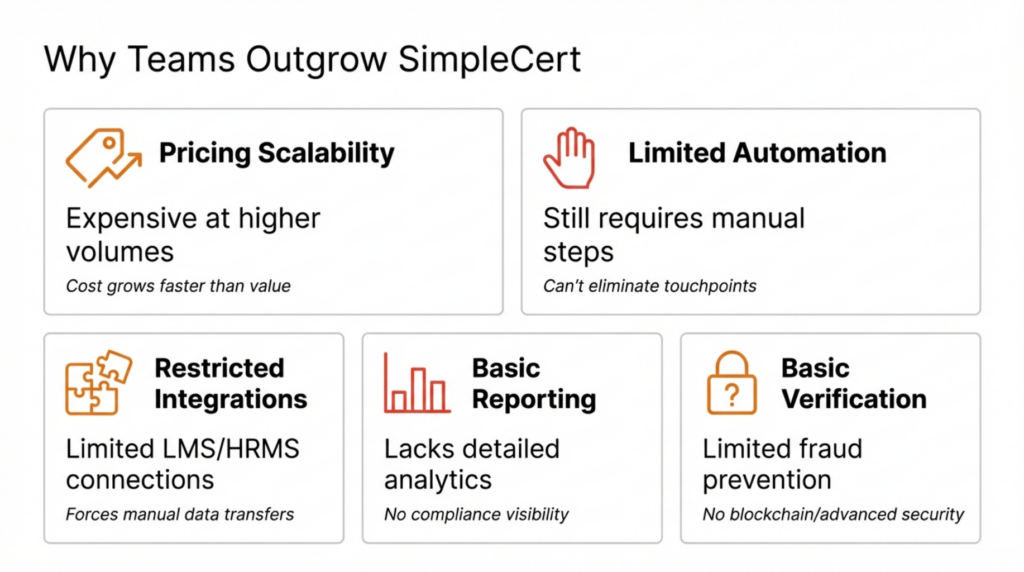
Organizations evaluating alternatives typically identify several constraints that become problematic as programs scale or requirements evolve.
Pricing scalability concerns emerge as certificate volumes increase. SimpleCert’s tiered pricing model can become expensive relative to value delivered, particularly for organizations issuing thousands of certificates monthly. The cost per certificate decreases with volume, but organizations often find competing platforms offering better pricing structures for their specific usage patterns.
Limited automation beyond basic batch generation restricts workflow efficiency. While SimpleCert handles simple CSV uploads and template population, it lacks sophisticated automation features like API-triggered generation, complex conditional logic, or deep integration with learning management systems. Organizations needing these capabilities must seek platforms with more robust automation engines.
Restricted integrations prevent seamless workflows with existing software ecosystems. SimpleCert offers basic integrations but cannot match the connectivity options that more modern platforms provide. Organizations using specific LMS platforms, HRMS systems, or CRM tools may find integration limitations forcing manual data transfers that undermine automation benefits.
Reporting constraints limit visibility into certificate programs. SimpleCert provides basic issuance reports but lacks the comprehensive analytics, verification tracking, and compliance documentation that regulated industries or sophisticated programs require. Teams needing detailed insights often migrate to platforms with stronger reporting capabilities.
Verification features remain relatively basic compared to modern standards. While SimpleCert includes verification functionality, organizations requiring blockchain-anchored credentials, advanced fraud prevention, or white-labeled verification portals must explore alternatives offering enterprise-grade verification infrastructure.
These limitations don’t make SimpleCert a poor choice universally, but they explain why organizations research alternatives once their programs mature beyond basic needs.
What to Look for in SimpleCert Alternatives
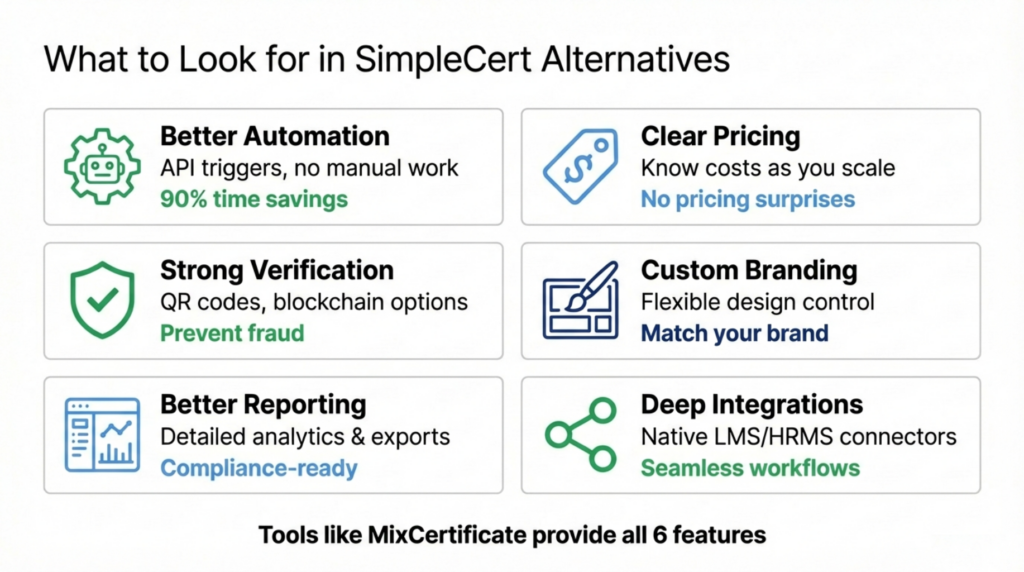
Evaluating SimpleCert alternatives requires examining specific capabilities that address common SimpleCert limitations while matching organizational requirements.
Automation and bulk issuance capabilities should extend beyond simple batch processing. Look for platforms supporting API-triggered generation, webhook integrations, and conditional workflows that eliminate manual intervention entirely. The best platforms generate certificates automatically based on completion events from connected systems.
Cost transparency helps avoid pricing surprises as volumes grow. Platforms should provide clear pricing models showing exactly what you’ll pay at different volume levels. Tiered pricing is common, but transparent structures prevent unexpectedly high costs when certificate programs scale successfully.
Verification and trust features determine credential credibility. Strong alternatives embed unique verification codes, QR links, or blockchain anchoring in every certificate. Public verification portals allowing anyone to confirm authenticity without contacting issuers prove particularly valuable. Platforms like MixCertificate build comprehensive verification infrastructure as core functionality rather than afterthought features.
Custom branding options ensure certificates match organizational identity perfectly. While SimpleCert offers template customization, some alternatives provide more flexible design tools, dynamic layouts, and multi-language support that SimpleCert cannot match. Brand consistency across certificates matters for professional presentation.
Export and reporting features provide operational visibility and compliance documentation. Platforms should offer detailed analytics on issuance patterns, verification requests, certificate downloads, and recipient engagement. Export capabilities to various formats help integrate certificate data with other business intelligence systems.
Integration ecosystem determines how well certificate platforms work with existing tools. The best alternatives connect seamlessly with popular learning management systems, HRMS platforms, event management software, and marketing automation tools. Native integrations eliminate custom development work.
Organizations should prioritize features matching their specific pain points rather than seeking every possible capability, ensuring selected platforms deliver value proportional to cost.
Top SimpleCert Alternatives Compared
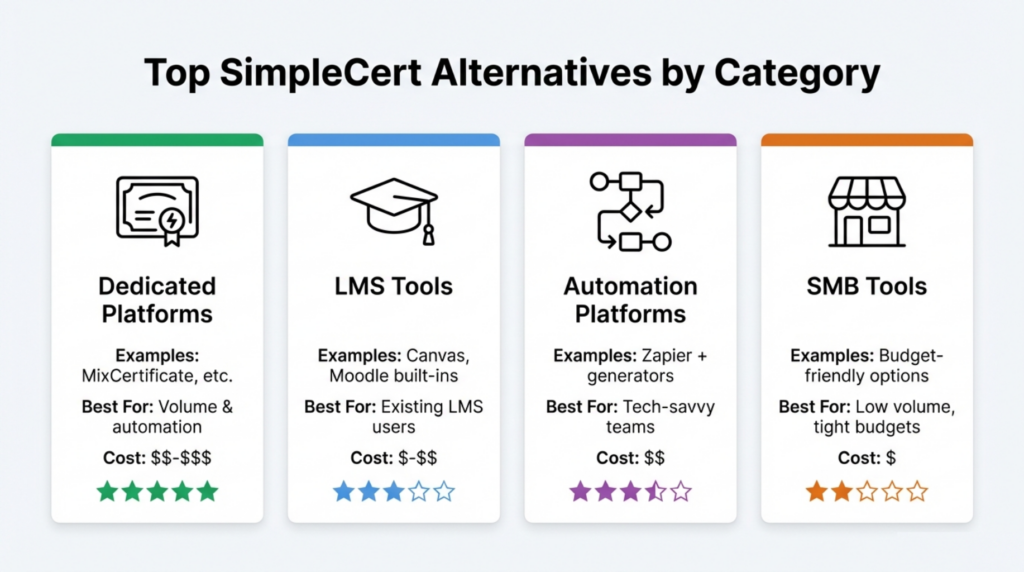
Several platform categories offer viable SimpleCert alternatives, each serving different organizational profiles and technical requirements.
Dedicated Certificate Platforms
Purpose-built certificate software like MixCertificate focuses exclusively on credential automation, verification, and management. These platforms typically provide the most comprehensive feature sets including advanced automation, robust verification infrastructure, extensive integrations, and detailed analytics. Organizations treating certificates as core business function benefit from dedicated platforms designed specifically for credential workflows rather than adapted from other tools.
MixCertificate exemplifies this category by offering bulk generation, API access, verification portals, compliance tracking, and integration capabilities that exceed SimpleCert’s offerings. These platforms serve organizations that have clearly outgrown basic tools and need professional-grade certificate infrastructure.
LMS-Friendly Solutions
Learning management system integrations provide alternatives for educational organizations already using LMS platforms for content delivery. Canvas, Moodle, and similar systems offer certificate modules that automate credential issuance upon course completion. These work well when certificate needs align closely with LMS capabilities.
However, LMS-based options typically offer less customization and verification capability than dedicated certificate platforms like MixCertificate. They serve organizations prioritizing tight LMS integration over standalone certificate features.
Automation-First Tools
Workflow automation platforms can function as alternatives by connecting data sources to certificate generation services. These solutions offer maximum flexibility for organizations comfortable with workflow configuration. While requiring more technical setup than SimpleCert, automation-first tools accommodate highly customized workflows that rigid platforms cannot support.
These options suit organizations with technical resources willing to invest setup time for precisely tailored certificate automation matching unique business processes.
SMB-Focused Platforms
Small business certificate tools position themselves as alternatives by emphasizing affordability and simplicity. These platforms sacrifice some advanced features for straightforward interfaces and lower price points. They suit organizations with modest certificate volumes and basic requirements.
The category includes both SimpleCert competitors and platforms like MixCertificate that scale from small business needs through enterprise requirements, providing growth runway without platform migration.
Selecting among alternatives depends on matching platform strengths to organizational priorities around automation, verification, integration, reporting, and cost structure.
SimpleCert vs Modern Certificate Software
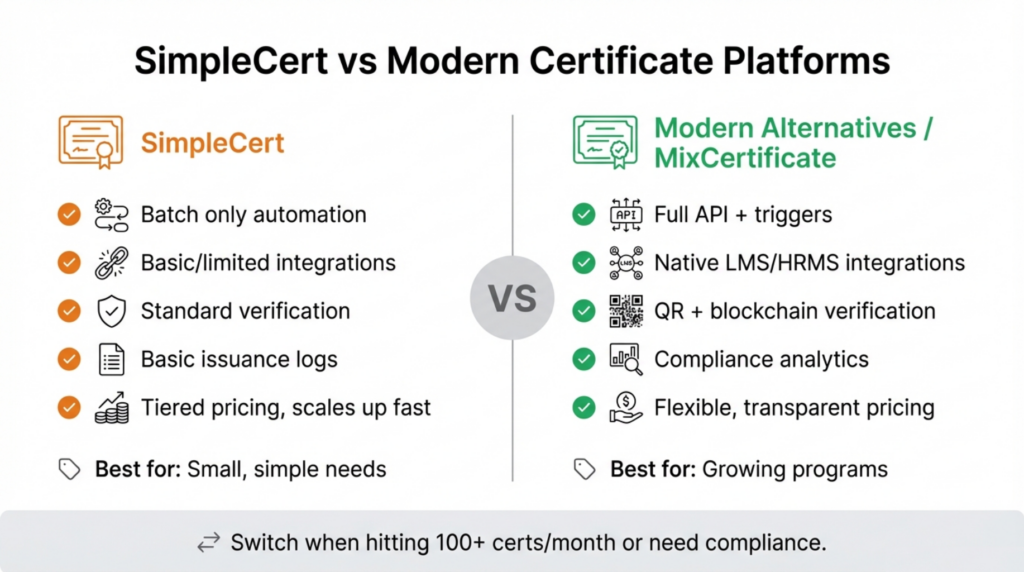
Comparing SimpleCert to modern alternatives reveals how certificate automation has evolved beyond basic batch generation.
Workflow comparison shows differences in operational efficiency. SimpleCert workflows involve uploading CSV files, selecting templates, generating batches, and distributing certificates through email. Modern platforms like MixCertificate automate these steps through API integrations that trigger certificate generation automatically when learners complete courses or employees finish training.
This workflow difference means SimpleCert requires ongoing manual intervention while advanced alternatives operate hands-off once configured. The efficiency gap compounds over time as certificate programs grow.
Manual vs automated issuance distinguishes SimpleCert from more sophisticated alternatives. SimpleCert reduces manual work compared to completely manual processes but still requires human touchpoints for each certificate batch. Leading alternatives eliminate manual steps entirely through automated data synchronization, triggered generation, and automatic delivery.
Organizations using platforms like MixCertificate report 90 to 95 percent reductions in certificate-related administrative time compared to SimpleCert workflows. This time savings translates directly to cost savings as staff focus on program improvement rather than certificate production.
Time and error reduction benefits from automation depth. SimpleCert reduces errors relative to manual processes by eliminating document editing mistakes. However, manual CSV preparation for SimpleCert batches still introduces data entry errors. Full automation through advanced alternatives pulls data directly from authoritative systems, ensuring accuracy without human data handling.
The comparison reveals that SimpleCert occupies middle ground between completely manual processes and fully automated certificate infrastructure. Organizations comfortable with this middle position may find SimpleCert adequate, while those seeking maximum automation benefit from exploring alternatives offering deeper workflow integration.
Which SimpleCert Alternative Is Right for You?
Selecting appropriate SimpleCert alternatives requires matching platform capabilities to specific organizational scenarios and growth trajectories.
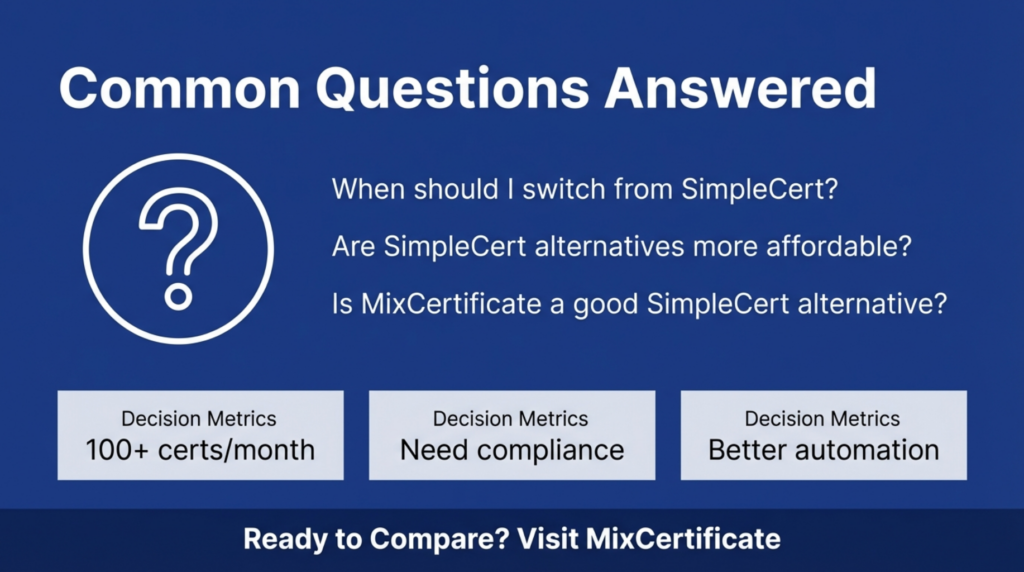
Small teams with low volume issuing fewer than 100 certificates monthly may find SimpleCert adequate unless verification or integration needs demand more robust platforms. However, even small teams should consider alternatives with flexible pricing if they anticipate growth, avoiding future migration costs.
Growing training programs expanding from dozens to hundreds or thousands of certificates monthly need alternatives with proven scalability. Look for platforms demonstrating stable performance at your target volume. MixCertificate and similar dedicated certificate platforms handle volume increases smoothly, while some tools struggle with scale.
Organizations needing verification and reporting should prioritize alternatives offering robust verification infrastructure and comprehensive analytics. Compliance-driven industries, professional certification bodies, and formal training programs require audit trails and verification capabilities that basic tools cannot provide. Platforms like MixCertificate build these features as core functionality.
Integration-dependent workflows requiring tight connections between certificates and existing systems need alternatives with extensive integration capabilities. Organizations using specific LMS platforms, HRMS systems, or custom applications should verify that alternatives support their required integrations before migrating from SimpleCert.
Budget-conscious organizations should compare total cost of ownership across alternatives rather than focusing solely on base pricing. Consider certificate volume projections, required features, implementation costs, and ongoing maintenance when evaluating options. Sometimes higher-priced platforms deliver better value through reduced administrative overhead.
The right alternative matches your current requirements while accommodating anticipated growth without forcing another platform migration within two to three years.
Frequently Asked Questions (FAQs)
What are the best SimpleCert alternatives?
The best alternatives depend on specific organizational needs, but leading options include dedicated certificate platforms like MixCertificate for comprehensive automation and verification, LMS-integrated solutions for educational institutions, and workflow automation tools for highly customized processes. Organizations should evaluate alternatives based on automation depth, verification features, integration capabilities, reporting quality, and cost structure relative to their certificate volumes.
Why do organizations switch from SimpleCert?
Organizations switch from SimpleCert when they encounter pricing scalability concerns as volumes increase, need more sophisticated automation beyond basic batch processing, require deeper integrations with learning management systems or HRMS platforms, want advanced verification and fraud prevention features, or need comprehensive reporting and analytics that SimpleCert cannot provide. Growth triggers and evolving requirements typically drive alternative searches.
Are SimpleCert alternatives more affordable?
Alternatives vary widely in pricing, with some offering better value at specific volume levels while others cost more but deliver proportionally greater functionality. Organizations should compare total cost of ownership including base pricing, volume tiers, implementation costs, and administrative time savings. Platforms like MixCertificate often prove more cost-effective for growing programs despite potentially higher base prices through eliminated manual work and better scalability.
Can SimpleCert alternatives handle bulk certificates?
Yes, most alternatives handle bulk certificate generation, with many offering superior bulk processing compared to SimpleCert. Advanced platforms like MixCertificate process thousands of certificates simultaneously with better error handling, validation, and automation than SimpleCert provides. When evaluating alternatives, verify specific bulk capacity limits and processing speeds to ensure platforms handle your volume requirements comfortably.
Is MixCertificate a SimpleCert alternative?
MixCertificate serves as a comprehensive SimpleCert alternative offering more advanced automation, robust verification infrastructure, extensive integration capabilities, and detailed analytics. The platform addresses common SimpleCert limitations through API-triggered generation, blockchain-anchored verification, native LMS connectors, and enterprise-grade reporting. MixCertificate scales from small business requirements through enterprise volumes, providing growth runway that prevents platform migration as certificate programs expand.
Conclusion
SimpleCert alternatives address limitations that organizations encounter as certificate programs grow beyond basic needs. While SimpleCert serves adequately for straightforward certificate automation at modest volumes, teams needing advanced automation, robust verification, extensive integrations, or comprehensive reporting benefit from exploring dedicated certificate platforms.
Explore MixCertificate Pricing Plans for your Organizations and the comparison reveals clear differentiators among SimpleCert alternatives across pricing transparency, automation depth, verification sophistication, integration ecosystems, and reporting capabilities. Platforms like MixCertificate provide comprehensive solutions purpose-built for certificate workflows rather than adapted from other tools.